Riley Simon · 14 September 2026
Shifts in User Behavior Analytics Across Niche Online Platforms Post-Migration
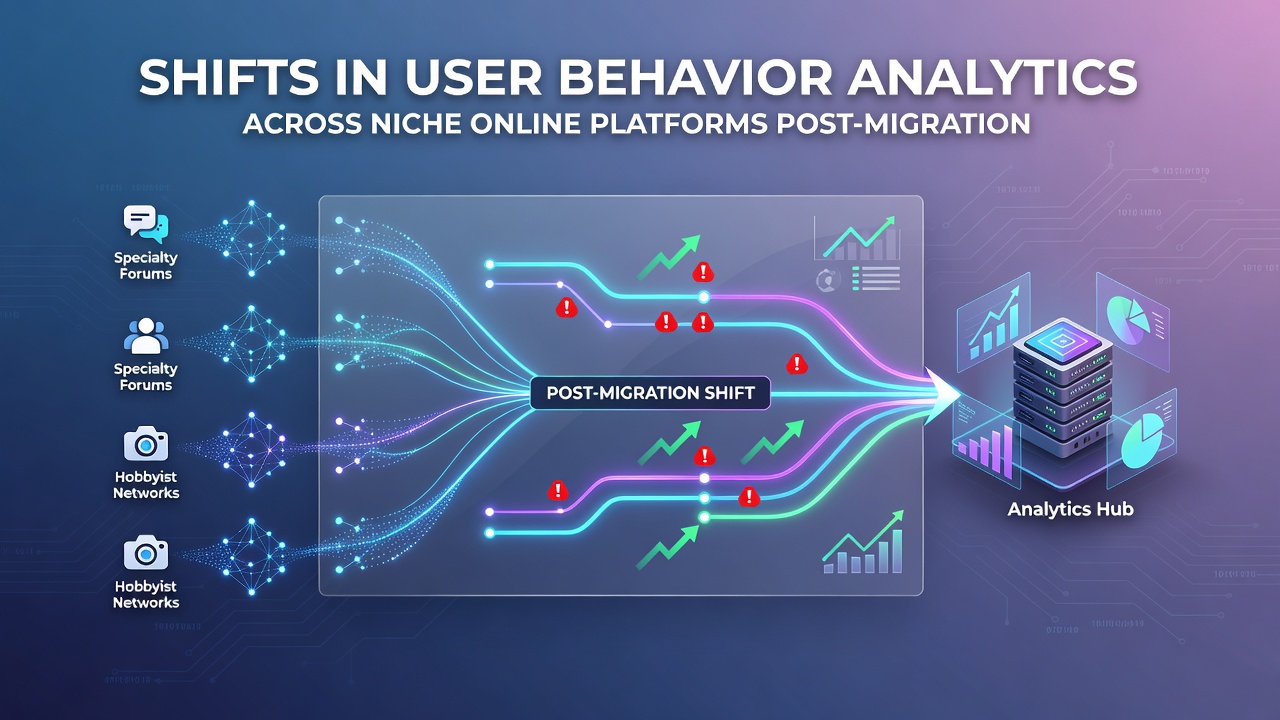
Platform migrations have reshaped how analysts track engagement patterns on specialized online communities since the mid-2020s, and data collected through September 2026 continues to highlight measurable changes in session duration, content interaction rates, and retention curves. Researchers tracking these movements note that users who relocate from mainstream networks to smaller, topic-focused sites often display longer average visit times alongside more focused navigation paths that bypass broad discovery feeds in favor of targeted search and subscription tools.
Tracking Core Metrics After Platform Transitions
Studies conducted by academic teams at institutions such as Stanford University show that bounce rates on niche platforms drop by double-digit percentages within the first six months following a major influx of new users, while repeat-visit frequency rises as participants settle into threaded discussions and resource libraries rather than scrolling through algorithmic timelines. These patterns emerge because new arrivals bring habits formed on larger sites yet adapt quickly to interfaces that emphasize depth over volume, leading analysts to adjust their models for dwell time and scroll depth accordingly.
European Commission reports on digital platform usage further indicate that privacy-conscious tools built into many niche environments encourage users to disable cross-site tracking pixels, which in turn forces analysts to rely more heavily on first-party data sets and aggregated cohort reporting. As a result, dashboards maintained by community operators now prioritize internal event logs over third-party referrals, and this shift has produced clearer pictures of how users progress from initial sign-up to sustained contribution within specific interest groups.
Regional Variations in Post-Migration Patterns
Observers in North America and the Asia-Pacific region have documented parallel yet distinct trajectories. Data compiled by the Australian Competition and Consumer Commission reveals that users migrating to hobbyist marketplaces and discussion boards in those markets tend to cluster around evening hours in their local time zones, producing predictable spikes in comment volume and file uploads that platform teams can anticipate and provision for in advance. Meanwhile, Canadian research consortia have recorded elevated rates of direct messaging on platforms that replaced public feeds with private group structures, prompting analysts to recalibrate notification algorithms and content recommendation engines to match the new communication style.
Adjustments in Analytical Frameworks
Analysts have responded to these developments by expanding the variables they monitor, incorporating metrics such as thread initiation frequency and cross-posting behavior between related niche sites. One study released in early 2026 demonstrated that users who maintain accounts on multiple specialized platforms exhibit lower overall time spent per site yet higher completion rates for multi-step actions like uploading resources or moderating community threads. These findings have encouraged operators to integrate cross-platform attribution models that respect user consent boundaries while still capturing the distributed nature of contemporary online participation.
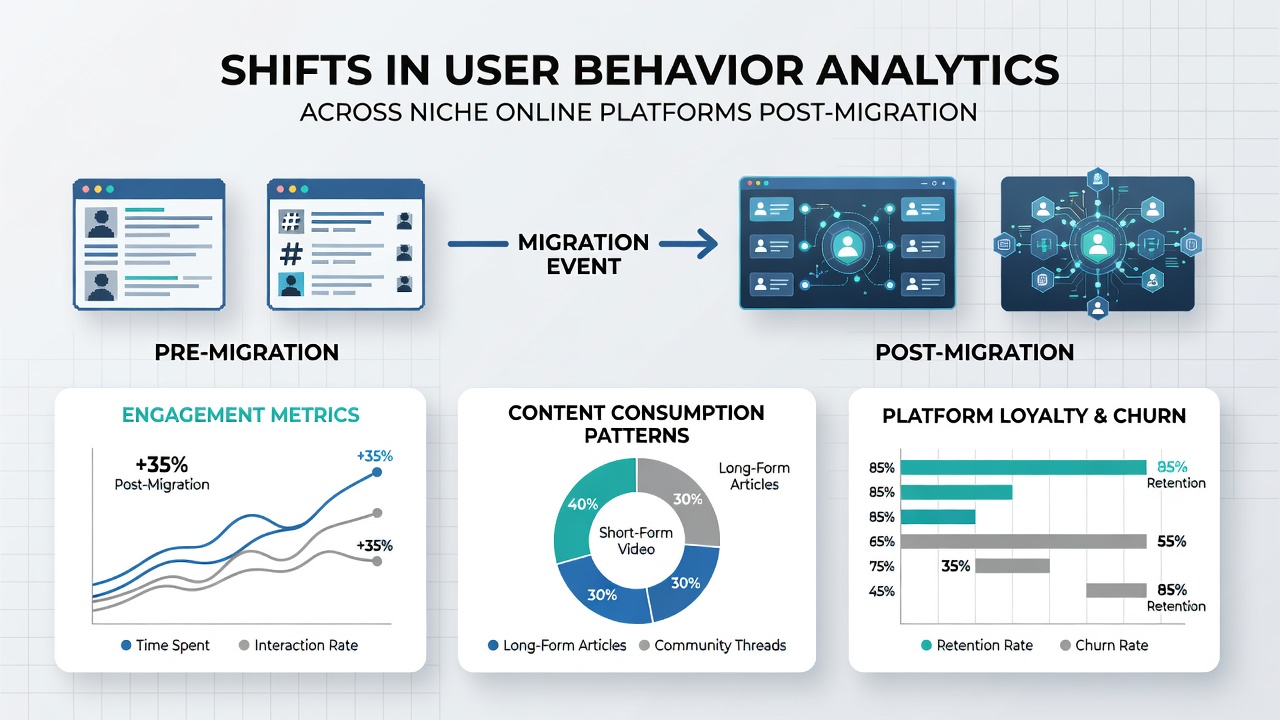
Industry groups focused on digital infrastructure have also updated their benchmarking standards to reflect the realities of post-migration environments. Reports from the Internet Society emphasize that smaller platforms often experience an initial surge in support tickets related to account migration tools, followed by a stabilization phase in which users begin generating original content at rates exceeding pre-migration baselines. This sequence has led many analytics teams to weight qualitative signals, such as post quality scores derived from community feedback, more heavily than raw page-view counts alone.
Implications for Platform Operators and Data Teams
Operators managing niche environments now allocate greater resources to real-time cohort analysis that segments users according to their arrival wave rather than treating all traffic as a single population. This granular approach helps identify which onboarding sequences produce the strongest long-term retention, and it has become standard practice on platforms that absorbed users displaced by policy changes or interface overhauls on larger networks. Figures compiled through September 2026 indicate that platforms adopting these segmented models report steadier growth in active contributor counts compared with those relying on legacy aggregate reporting.
Academic and governmental sources continue to supply fresh data sets that refine these practices. Research published through university partnerships and regulatory bodies in multiple jurisdictions supplies operators with comparative benchmarks that account for differences in platform size, topic focus, and geographic reach. Analysts who integrate these external references into their internal tooling gain more reliable forecasts of how future migration events may alter established behavior curves.
Conclusion
Collectively, the evidence assembled since the major migration waves of recent years demonstrates that user behavior on niche online platforms evolves along predictable yet adaptable lines once individuals complete their transition from larger networks. Metrics related to engagement depth, retention timing, and content creation shift in measurable ways, prompting analysts to refine their data collection methods and interpretation frameworks accordingly. As platforms continue to operate under these new conditions, ongoing collaboration between academic researchers, regulatory bodies, and industry organizations will supply the comparative data needed to keep analytical practices aligned with actual user activity.